At The Dog Institute, every dog we train learns with 100% positive reinforcement. We often get asked about prong collars, choke chains, and slip leads, so here's why you won't see them in our classes, and what we recommend instead.
Your dog's neck is a lot like yours
Dogs have much the same anatomy in the neck as we do. Just under the skin at the front of the throat sits the trachea (windpipe), which carries every breath. Around it are the esophagus, the thyroid gland, major blood vessels, nerves, and lymph nodes. There's very little padding to protect any of it.
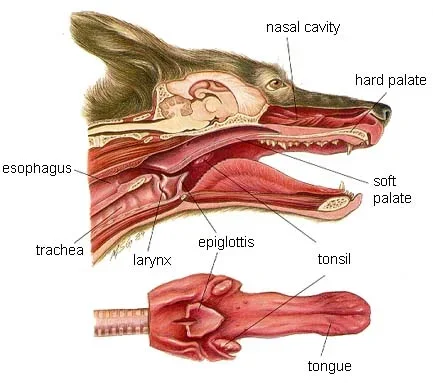
The trachea (windpipe) and esophagus run right down the front of the neck, where a collar sits.
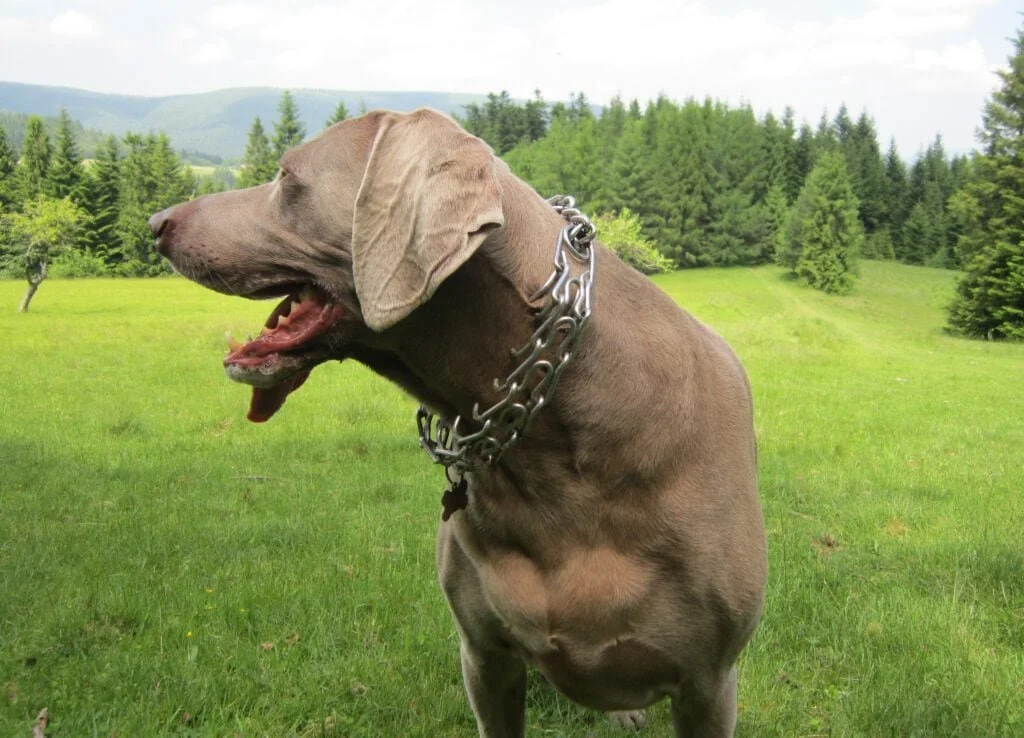
Imagine wearing a collar of metal points that tightens around your throat every time someone tugs. That's what a prong collar does.
What a prong collar does when your dog pulls
A prong collar is built to pinch. Even light pulling presses the prongs into the neck, right over the windpipe and the soft tissue around it. That pressure can make breathing harder and can irritate or injure the throat. For dogs with a weak or collapsing trachea, which is common in small breeds, it can make things worse.
Watch a dog wearing one and you'll often see them leaning, coughing, or holding their head at an odd angle. That's not good manners. That's discomfort.
Dogs have thoughts and feelings
Many people believe a quick tug on a prong collar "corrects" unwanted behavior. But your dog doesn't understand the pain as a lesson about what they did. They connect it with whatever they were looking at in that moment.
If your dog gets a painful jerk every time they see another dog, a child, or a skateboard, they can learn to fear those things. A dog who is afraid is more likely to bark, lunge, or snap, which is exactly the behavior you were trying to stop.
Positive reinforcement works the other way around. We reward what we want to see, so your dog learns that good choices pay off and the world is a safe place.
Choke chains and slip leads aren't better
Choke chains and slip leads tighten around the neck when your dog pulls, putting the same pressure on the throat. They're painful too. And when they loosen, many dogs can back right out of them, which is the last thing you want on a busy Williamsburg street.
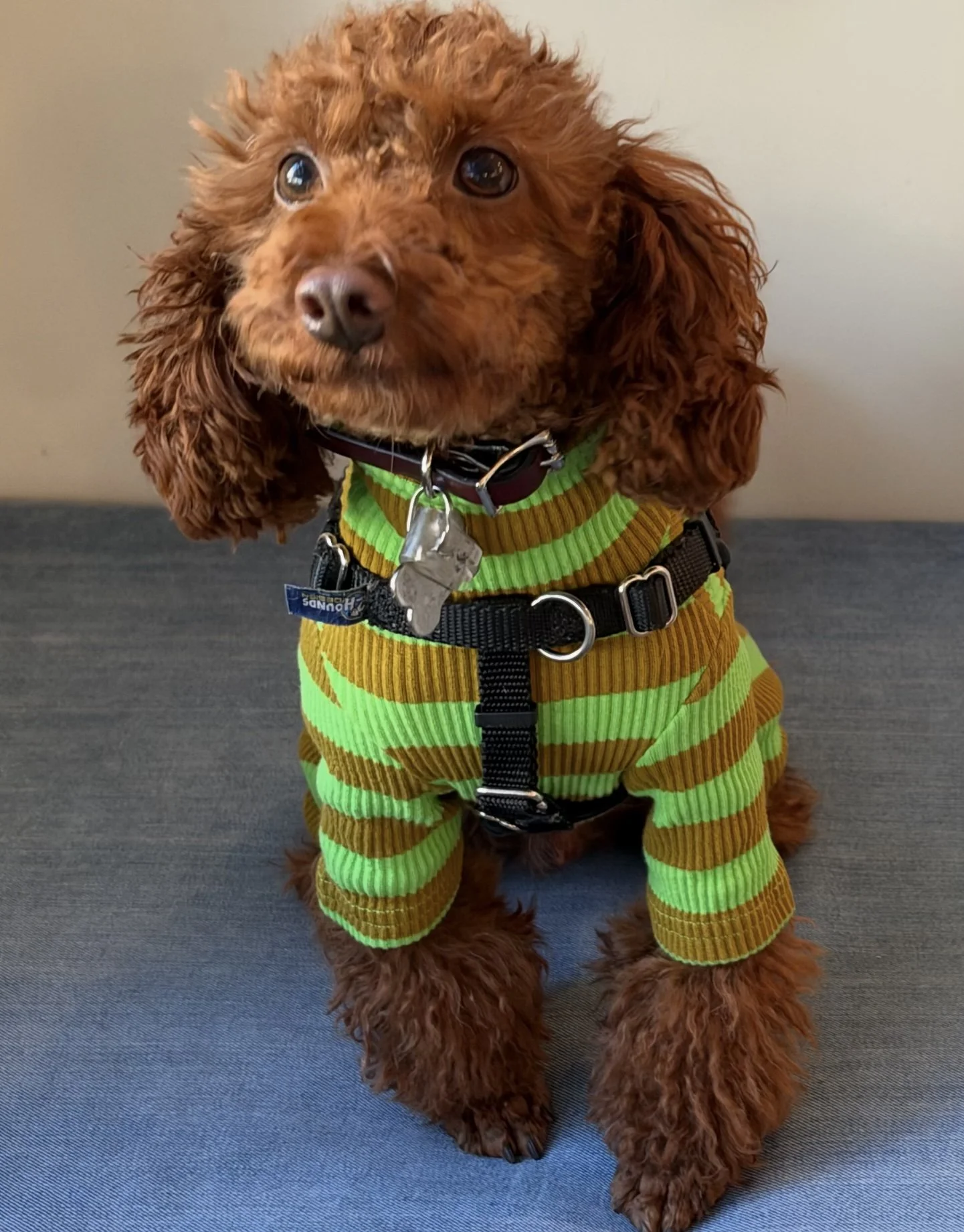
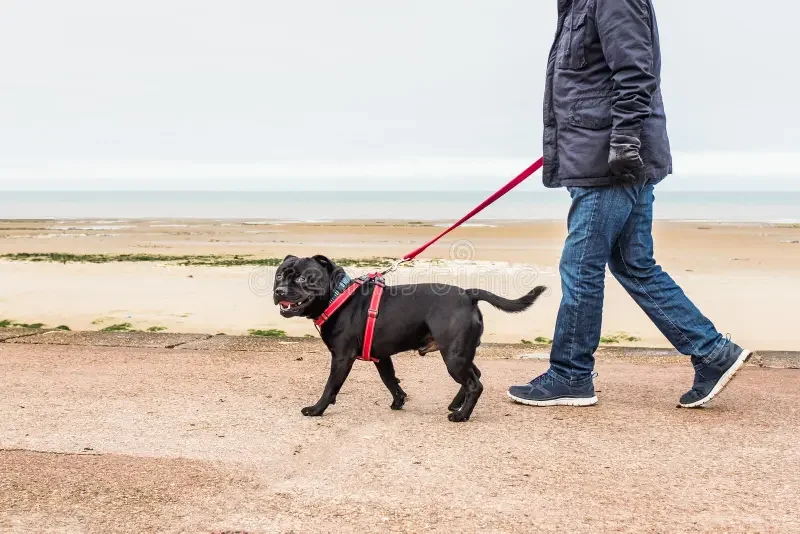
What we recommend: a harness
A well-fitted harness spreads pressure across your dog's chest and shoulders instead of their throat. It's more comfortable, it's harder to slip out of, and it gives you better control.
Our favorite is the 2 Hounds Design Freedom No-Pull Harness. It has a front clip on the chest that gently turns your dog toward you when they pull, so pulling simply stops working. Pair it with treats and practice, and you'll have a dog who chooses to walk with you.